
Discover the complete HR compliance checklist every company should follow. Learn how employment laws, HR policies, employee documentation, and legal compliance help businesses reduce risks and build a compliant workplace.

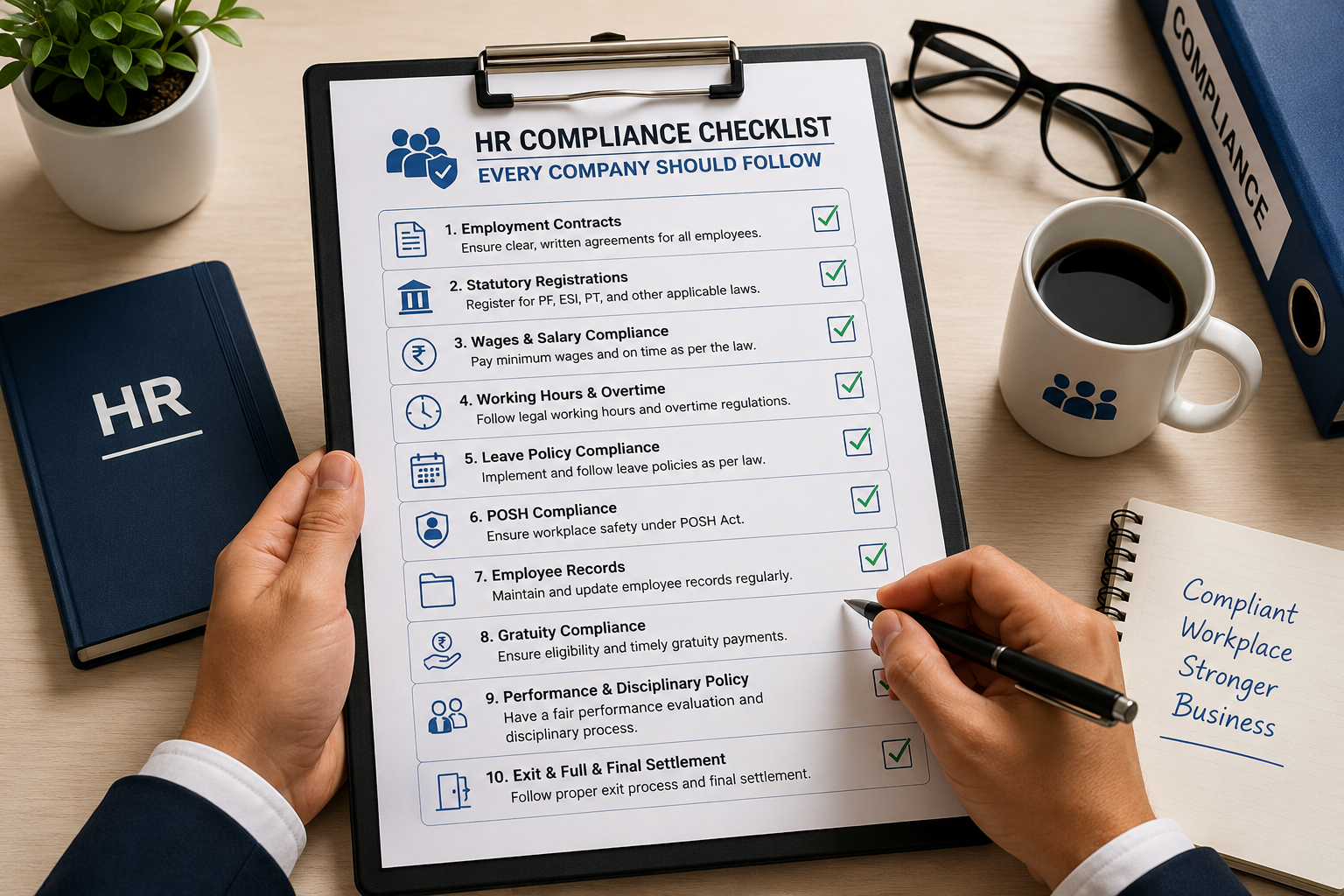
HR Compliance Checklist Every Company Should Follow
Human Resources (HR) is more than hiring employees and managing payroll. Every organization has legal responsibilities toward its workforce, and failing to meet these obligations can result in penalties, employee disputes, regulatory action, and reputational damage.
As businesses grow, HR compliance becomes increasingly important. Whether you are a startup, MSME, or established company, having a strong HR compliance framework protects both your employees and your business.
Many organizations unknowingly operate with outdated employment contracts, missing HR policies, incomplete employee documentation, or non-compliance with labour laws. These issues often remain unnoticed until an inspection, legal dispute, or employee complaint occurs.
This comprehensive HR Compliance Checklist will help your organization identify essential compliance requirements and build a legally compliant workplace.
What is HR Compliance?
HR compliance refers to ensuring that an organization’s employment practices, workplace policies, employee records, and HR processes comply with applicable labour laws, employment regulations, and statutory requirements.
It covers everything from recruitment and onboarding to employee separation and statutory filings.
Effective HR compliance protects businesses from legal risks while creating a transparent and fair work environment.
Why HR Compliance Matters
Businesses that ignore HR compliance expose themselves to numerous risks, including:
- Labour law violations
- Employee disputes
- Financial penalties
- Government notices
- Wrongful termination claims
- Workplace harassment complaints
- Payroll compliance issues
- Loss of business reputation
A compliant HR system improves employee trust, strengthens governance, and reduces legal exposure.
Complete HR Compliance Checklist
1. Employment Agreements
Every employee should receive a properly drafted Employment Agreement or Appointment Letter before joining.
The agreement should clearly define:
- Job role and responsibilities
- Compensation structure
- Working hours
- Leave entitlement
- Probation period
- Notice period
- Confidentiality obligations
- Intellectual property ownership
- Termination conditions
Well-drafted employment agreements reduce misunderstandings and protect both employers and employees.
2. Employee Documentation
Maintain complete records for every employee.
Important documents include:
- Identity proof
- Address proof
- Educational certificates
- Experience letters
- PAN Card
- Aadhaar Card
- Bank details
- Emergency contact information
- Signed employment contract
Proper documentation supports legal compliance and simplifies HR management.
3. HR Policies and Employee Handbook
Every company should have documented HR policies that clearly communicate workplace expectations.
Common policies include:
- Attendance Policy
- Leave Policy
- Code of Conduct
- Remote Work Policy
- Dress Code Policy
- Performance Management Policy
- Grievance Policy
- Disciplinary Policy
- Social Media Policy
- Data Privacy Policy
Employees should acknowledge these policies during onboarding.
4. Labour Law Compliance
Businesses must comply with applicable labour laws depending on their industry, workforce size, and location.
Compliance may include:
- Working hours
- Minimum wages
- Overtime regulations
- Weekly holidays
- Employee welfare requirements
- Leave provisions
- Wage payments
- Employee benefits
Regular reviews help ensure ongoing compliance with changing regulations.
5. POSH Compliance
Organizations employing the required number of employees must comply with the Prevention of Sexual Harassment (POSH) requirements.
This generally includes:
- POSH Policy
- Internal Committee (where applicable)
- Employee awareness programs
- Complaint handling procedures
- Record maintenance
A safe workplace is both a legal and ethical responsibility.
6. Statutory Registrations and Filings
Businesses should verify that all required registrations remain active and up to date.
Depending on the organization, this may include:
- EPF Compliance
- ESI Compliance
- Professional Tax
- Labour Registrations
- Shops & Establishments Registration
- State-specific registrations
Timely filings help avoid penalties and regulatory notices.
7. Payroll Compliance
Payroll management must comply with applicable legal requirements.
Review areas such as:
- Salary structure
- Statutory deductions
- Tax deductions
- Bonus compliance
- Leave encashment
- Overtime payments
- Final settlements
Accurate payroll reduces employee disputes and compliance risks.
8. Leave Management
Every organization should clearly define employee leave rules.
These generally include:
- Casual Leave
- Sick Leave
- Earned Leave
- Maternity Leave
- Paternity Leave
- Public Holidays
- Leave Approval Process
Proper leave records improve transparency and compliance.
9. Confidentiality and Intellectual Property Protection
Employees often have access to confidential business information.
Businesses should implement:
- Confidentiality Agreements
- Non-Disclosure Agreements (NDAs)
- Intellectual Property Clauses
- Data Security Policies
These documents protect valuable business assets and proprietary information.
10. Employee Exit Process
A legally compliant exit process protects both the employer and the employee.
The process should include:
- Notice period compliance
- Exit interviews
- Clearance process
- Return of company assets
- Experience letter
- Full and final settlement
- Confidentiality obligations after exit
A structured exit process minimizes future legal disputes.
11. Workplace Safety
Every employer has a responsibility to provide a safe working environment.
Organizations should regularly review:
- Workplace safety procedures
- Emergency response plans
- Fire safety measures
- Employee health initiatives
- Safety training
Safe workplaces improve employee confidence and reduce liability.
12. Regular HR Compliance Audits
HR compliance is not a one-time activity.
Employment laws, organizational policies, and regulatory requirements evolve continuously.
Conducting periodic HR compliance audits helps businesses:
- Identify compliance gaps
- Update outdated policies
- Review employee records
- Verify statutory compliance
- Reduce legal risks
- Improve HR governance
Annual audits are recommended for most organizations.
Common HR Compliance Mistakes Businesses Make
Many companies unintentionally expose themselves to legal risks by:
- Using outdated appointment letters
- Operating without HR policies
- Missing employee documentation
- Ignoring labour law updates
- Delaying statutory filings
- Maintaining incomplete payroll records
- Failing to implement POSH compliance
- Conducting irregular compliance reviews
Addressing these issues proactively helps businesses avoid costly legal consequences.
How Law MahaGuru Helps Businesses
Organizations with effective HR compliance systems enjoy several advantages:
- Reduced legal risks
- Better employee trust
- Improved workplace transparency
- Easier regulatory inspections
- Stronger corporate governance
- Reduced financial penalties
- Better investor confidence
- Professional HR operations
- Improved business reputation
Compliance is not just about avoiding penalties—it contributes to sustainable business growth.





Comments
annabrown
Wow, cool post, thanks for sharing.
cmsmasters
Happy to be of service.