
Legal compliance is more than a regulatory requirement—it’s a business necessity. Learn how a professional legal compliance audit helps businesses identify risks, avoid penalties, and build a stronger legal foundation.


Apps as a Direct Communication Channel
In today’s rapidly changing regulatory environment, legal compliance is no longer just the responsibility of large corporations. Every business—whether it’s a startup, MSME, private limited company, LLP, or established enterprise—must comply with numerous laws governing employment, taxation, contracts, data protection, corporate governance, intellectual property, and industry-specific regulations.
As businesses become increasingly digital and regulations continue to evolve, maintaining compliance has become more challenging than ever. A single overlooked document, expired license, poorly drafted contract, or missed statutory requirement can result in legal notices, financial penalties, operational disruptions, and reputational damage.
This is where a Legal Compliance Audit becomes invaluable.
A legal compliance audit helps organizations identify legal gaps before they become costly problems. Rather than reacting to legal issues after they occur, businesses can proactively strengthen their legal framework, improve governance, and operate with confidence.
What is a Legal Compliance Audit?
A Legal Compliance Audit is a systematic review of a company’s legal and regulatory obligations. It evaluates whether the business is complying with applicable laws, internal policies, contractual commitments, and statutory requirements.
The objective is not simply to identify non-compliance but to provide practical recommendations that help businesses minimize risks and improve their legal processes.
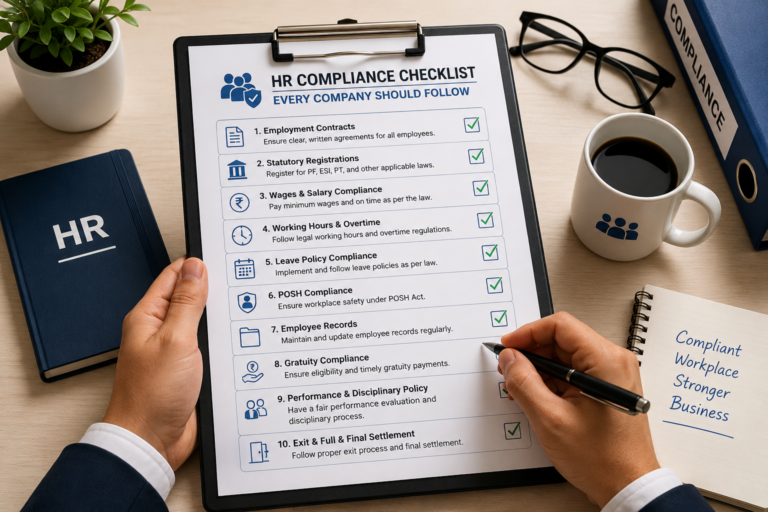
A comprehensive audit generally covers:
- Corporate compliance
- Labour law compliance
- Employment documentation
- Contract management
- Vendor agreements
- Intellectual property protection
- Company policies
- Regulatory registrations
- Licensing requirements
- Data privacy obligations
- Risk management systems
Instead of waiting for legal disputes, businesses can identify weaknesses early and implement corrective actions.
Why Compliance Matters More Than Ever in 2026
Businesses today face greater legal scrutiny than ever before.
Government departments are increasingly digitizing compliance monitoring. Labour regulations continue to evolve. Data privacy expectations are rising. Investors conduct detailed legal due diligence before funding businesses. Clients and enterprise partners expect vendors to maintain strong compliance standards.
In 2026, legal compliance has become a strategic business function rather than merely an administrative responsibility.
Companies that maintain proper compliance systems enjoy greater credibility with investors, financial institutions, customers, and business partners.





Comments
adamgordon
Thanks for sharing this information is useful for us.